

Regulatory compliance has become a strategic priority for businesses operating in Saudi Arabia. As the Kingdom continues to modernize its legal and regulatory framework under Vision 2030, organizations are expected to meet increasingly complex legal obligations across multiple industries.
Today, compliance with the regulations issued by government authorities is no longer simply about avoiding penalties. It plays a critical role in protecting business continuity, strengthening corporate governance, and building confidence among investors, regulators, and commercial partners.
What Is Regulatory Compliance?
Every organization operating in Saudi Arabia is subject to laws and regulations that govern its activities. Understanding these obligations is the first step toward building an effective compliance program.
Definition of Regulatory Compliance
Regulatory compliance refers to an organization's adherence to the laws, regulations, standards, and directives issued by the competent authorities responsible for its industry. These obligations differ depending on the nature of the business but collectively establish the legal framework within which it must operate.
For example, regulatory compliance may include complying with tax legislation, employment laws, financial services regulations, cybersecurity standards, and personal data protection requirements. Depending on your business activities, advice relating to Labor & Employment , Zakat, Tax & Customs , or Intellectual Property & Information Technology may also form an essential part of your compliance strategy.
Regulatory Compliance vs. Internal Compliance vs. Corporate Governance
Although these terms are often used interchangeably, they describe different aspects of organizational risk management.
Regulatory compliance focuses on meeting external legal obligations imposed by government authorities and regulators. Internal compliance relates to an organization's own policies, procedures, and codes of conduct, while corporate governance establishes the broader framework for accountability, oversight, and ethical decision-making.
Strong governance depends on effective compliance & regulatory processes. Together, they help organizations reduce legal risks, improve transparency, and demonstrate responsible business practices.
Why Regulatory Compliance Matters Under Vision 2030
Saudi Arabia's Vision 2030 has significantly reshaped the country's regulatory environment. As the private sector expands and foreign investment increases, regulators continue to introduce new legislation and strengthen enforcement across a wide range of industries.
As a result, organizations must place greater emphasis on compliance with the regulations applicable to their operations. Companies that maintain robust compliance programs are often better positioned to manage risk, attract investment, and build long-term commercial relationships.
Examples of Regulatory Compliance in Practice
The application of regulatory compliance varies across industries. While every business must comply with general commercial laws, many sectors are also subject to industry-specific regulatory requirements.
Banking and Financial Services
Banks and other financial institutions operate within one of the Kingdom's most highly regulated sectors. The Saudi Central Bank (SAMA) issues detailed requirements covering capital adequacy, liquidity, anti-money laundering (AML/CFT), consumer protection, and operational risk management.
Because SAMA regularly updates its regulatory framework, financial institutions must continually review their policies and procedures to maintain compliance. Failure to implement new requirements can result in regulatory investigations, financial penalties, or restrictions on business activities.
Real Estate Compliance
Real estate transactions are subject to specific regulatory requirements that must be satisfied before ownership can be transferred.
For example, developers and property owners must comply with applicable registration procedures and tax obligations, including the Real Estate Transaction Tax where required. Failure to meet these obligations can delay transactions and expose businesses to enforcement action.
Tax and Commercial Compliance
Tax compliance is one of the most common examples of regulatory compliance in everyday business operations.
Businesses that exceed the applicable VAT threshold must register with the Zakat, Tax and Customs Authority (ZATCA), submit periodic tax returns, maintain accurate accounting records, and comply with electronic invoicing requirements where applicable.
Maintaining accurate financial records and submitting returns on time helps businesses avoid penalties while demonstrating ongoing compliance with the regulations governing commercial activities. Organizations with complex tax obligations often seek legal support in Zakat, Tax & Customs.
Key Regulatory Bodies and Their Requirements
Businesses in Saudi Arabia are often subject to multiple regulators, depending on their industry. Identifying the authorities that oversee your operations is essential for maintaining regulatory compliance and ensuring ongoing compliance with the regulations.
Capital Market Authority (CMA)
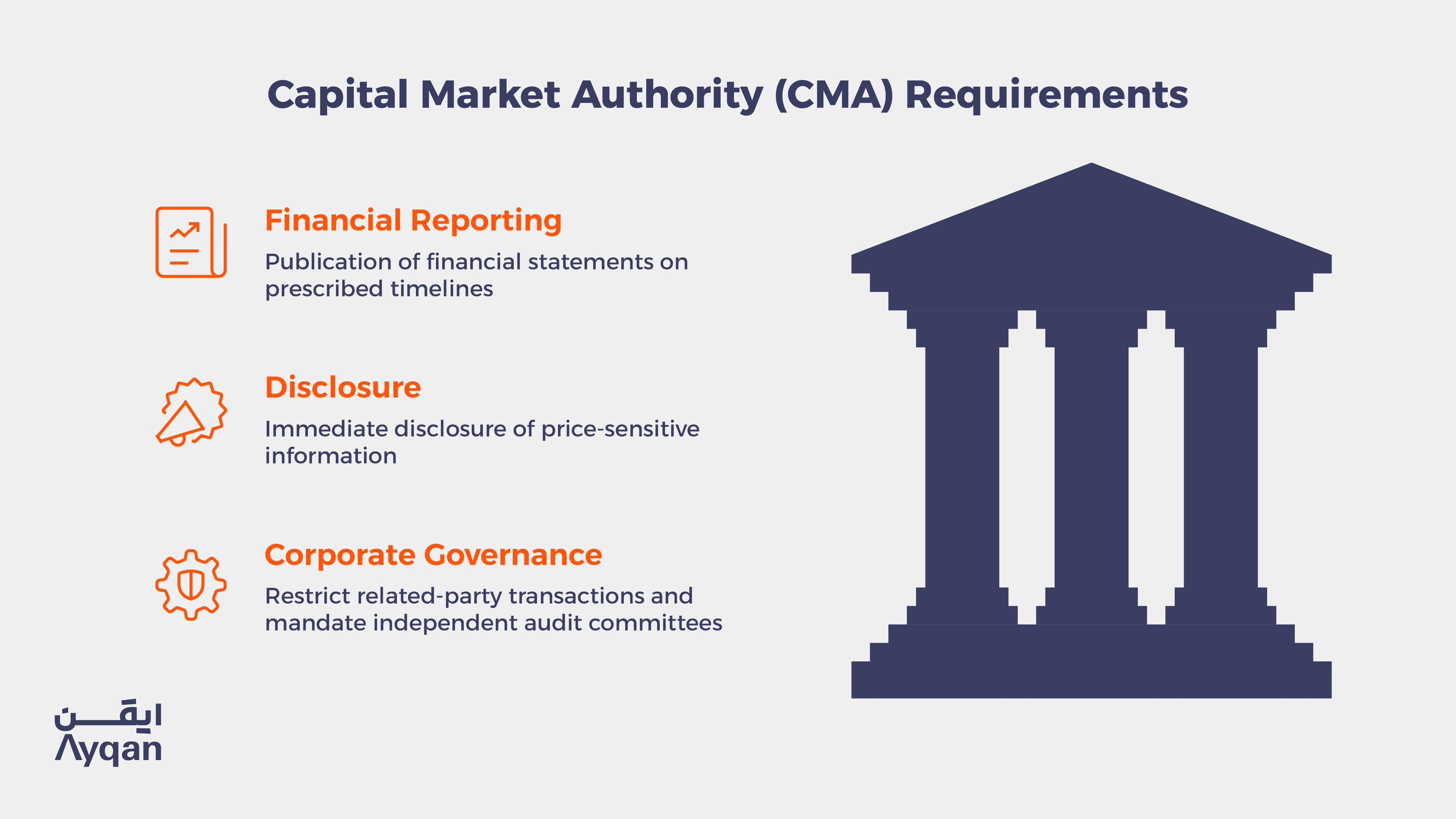
The Capital Market Authority (CMA) regulates Saudi Arabia's capital markets, including listed companies, investment firms, and public offerings of shares and sukuk. Its rules focus on corporate governance, financial disclosures, market transparency, and investor protection.
Saudi Central Bank (SAMA)
SAMA regulates banks, finance companies, insurance providers, and payment institutions operating in the Kingdom.
Its framework covers capital adequacy, risk management, anti-money laundering (AML/CFT), consumer protection, and financial data security. Continuous monitoring is essential to maintain regulatory compliance as new circulars and supervisory guidance are issued.
Zakat, Tax and Customs Authority (ZATCA)
ZATCA administers VAT, zakat, corporate tax, customs, and electronic invoicing requirements across Saudi Arabia.
Businesses must submit periodic filings, maintain accurate financial records, and meet reporting deadlines.
National Cybersecurity Authority (NCA) and Other Regulators
Cybersecurity and data protection are becoming increasingly important aspects of industrial regulatory compliance.
The NCA establishes cybersecurity requirements for critical sectors, while other authorities regulate industries such as telecommunications, healthcare, and energy.
Building an Effective Regulatory Compliance Framework
Maintaining regulatory compliance requires more than understanding the law. Businesses need clear responsibilities, documented procedures, and ongoing oversight to keep pace with regulatory change.
Establishing an Internal Compliance Function
An internal compliance function helps monitor legal obligations, identify risks, and implement effective controls. It also serves as the primary link between the business and regulatory authorities.
Large organizations often maintain dedicated compliance teams, while smaller businesses may rely on in-house counsel or external advisers. Strengthening these processes often goes hand in hand with Compliance, Governance & Investigations.
End-of-Service Award Compliance
Employers should also ensure that employees’ end-of-service entitlements are calculated and paid in accordance with Saudi Labour Law. The amount generally depends on factors such as the employee’s length of service, salary, and the circumstances in which employment ends. Accurate employment records and timely settlement of these benefits can help businesses avoid disputes and maintain compliance with applicable labour regulations.
The Role of a Compliance Officer
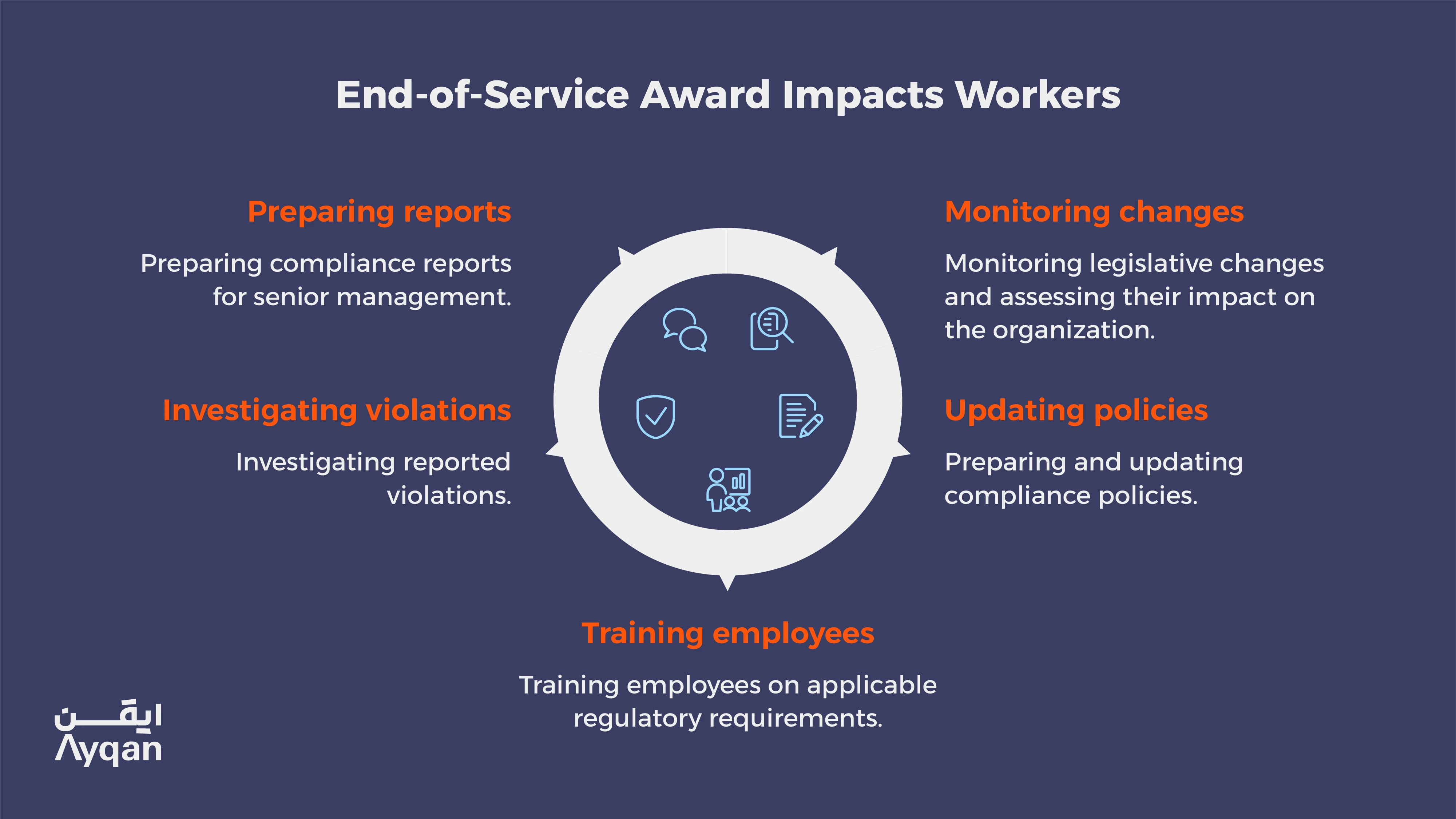
A Compliance Officer oversees the organization's day-to-day compliance activities and monitors legislative developments.
Their responsibilities typically include updating policies, training employees, investigating potential breaches, communicating with regulators, and reporting to senior management. Industry knowledge is particularly important where compliance regulations by industry vary significantly.
Whistleblowing and Compliance Audits
An effective compliance framework encourages employees to report concerns through confidential whistleblowing channels. Regular compliance audits also help identify gaps before they become legal or operational risks.
Regulatory Compliance in Key Sectors
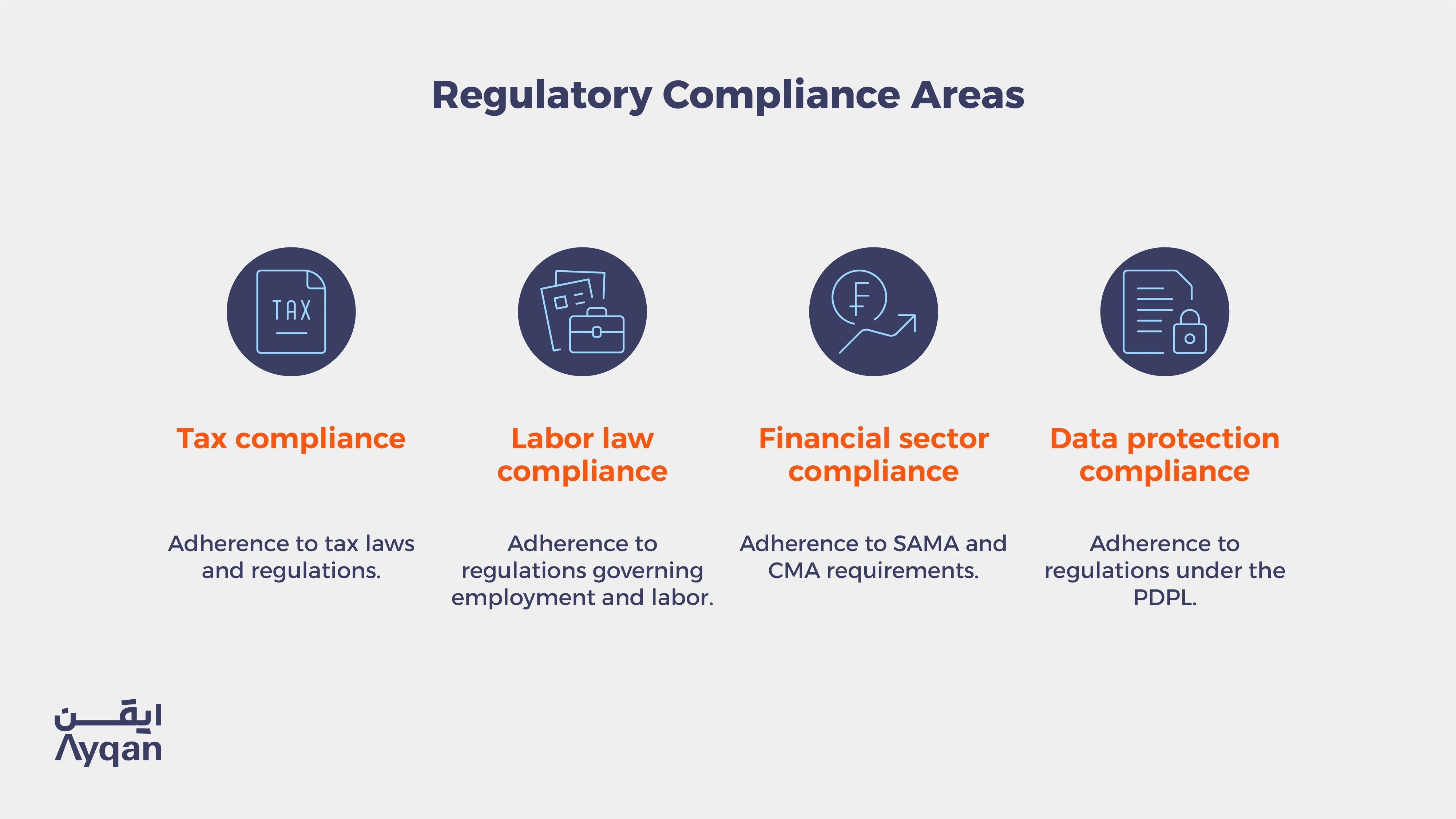
While every business must meet general legal obligations, some industries operate under significantly stricter regulatory oversight. Understanding these sector-specific requirements is essential for maintaining regulatory compliance and reducing legal and operational risks.
Banking and Financial Services
For banks and financial institutions, regulatory compliance is fundamental to business continuity. Failure to comply with anti-money laundering (AML/CFT) obligations or prudential requirements can lead to significant penalties, regulatory action, and reputational damage.
Saudi Arabia maintains robust oversight of the financial sector through SAMA as part of its international commitments.
Oil and Gas
The oil and gas industry faces extensive compliance regulations by industry, covering operational safety, environmental protection, and local content requirements.
Businesses must comply with standards issued by multiple authorities, including the Ministry of Energy, while also meeting sustainability objectives and IKTVA requirements. Non-compliance can result in project delays, financial penalties, or operational restrictions.
Artificial Intelligence and Emerging Technologies
Artificial intelligence presents new compliance & regulatory challenges as technology evolves faster than legislation.
Although Saudi authorities, including SDAIA, have issued guidance on responsible AI use, the legal framework continues to develop. Businesses adopting AI should regularly monitor regulatory changes and seek advice on Intellectual Property & Information Technology to reduce future compliance risks.
Challenges in Implementing Regulatory Compliance
Maintaining regulatory compliance is an ongoing process rather than a one-time exercise. As regulations evolve, businesses must continually adapt their policies, procedures, and governance practices.
Keeping Up With Regulatory Change
Saudi Arabia's legal framework continues to evolve in support of Vision 2030. Businesses should regularly monitor legislative updates to ensure continued compliance with the regulations affecting their operations.
Many organizations achieve this through internal compliance teams, external legal advisers, or regular compliance reviews.
Finding Qualified Compliance Expertise
Demand for experienced compliance professionals continues to grow, particularly in areas such as financial regulation, cybersecurity, and data protection.
Where internal expertise is limited, businesses often work with external advisers to strengthen their compliance framework and respond to increasingly complex regulatory requirements.
Balancing Compliance and Business Growth
Strong compliance processes require investment, but they should not become a barrier to commercial growth.
An effective compliance framework enables organizations to make informed business decisions while managing legal risk. Rather than slowing operations, good governance creates confidence for investors, customers, and regulators alike.
Building an Effective Regulatory Compliance System
An effective compliance program is built through planning, continuous monitoring, and strong governance. Embedding regulatory compliance into everyday business operations helps organizations respond more effectively to legal and regulatory change.
Identify Applicable Regulations
The first step is identifying the laws and regulatory authorities that apply to your business. Requirements will vary depending on the industry, business activities, and operational footprint.
Assess Compliance Risks and Gaps
Once regulatory obligations have been identified, businesses should evaluate their current level of compliance.
A structured compliance review helps identify gaps, prioritize risks, and develop practical action plans.
Develop Policies and Internal Controls
Regulatory requirements should be translated into clear internal policies and procedures that employees can consistently follow.
Training, internal controls, reporting mechanisms, and performance monitoring all help ensure ongoing compliance with the regulations while reducing operational risk.
Embed Compliance Into Corporate Governance
The most effective organizations integrate compliance into their governance framework rather than treating it as a standalone legal function.
Boards and senior management should regularly review compliance risks, monitor reporting, and ensure legal obligations are considered in strategic decision-making. Embedding compliance into governance strengthens accountability while creating a long-term competitive advantage for the business.
This article is provided for general information only and does not constitute legal advice. For advice on a specific matter, contact Ayqan Law Firm.