

Businesses involved in commercial disputes often seek faster, more confidential, and more flexible alternatives to court litigation. The Saudi Center for Commercial Arbitration (SCCA) has become the Kingdom's leading institution for resolving commercial disputes through arbitration and mediation, offering a modern dispute resolution framework that is recognized both domestically and internationally.
This guide explains the role of the Saudi Center for Commercial Arbitration, how SCCA arbitration works, the types of disputes the Center handles, its legal framework, and the advantages of choosing arbitration over traditional court proceedings in Saudi Arabia.
Ayqan Law Firm advises businesses and investors throughout every stage of SCCA proceedings, from drafting effective arbitration agreements and clauses to preparing submissions and providing full representation before arbitral tribunals.
What Is the Saudi Center for Commercial Arbitration?
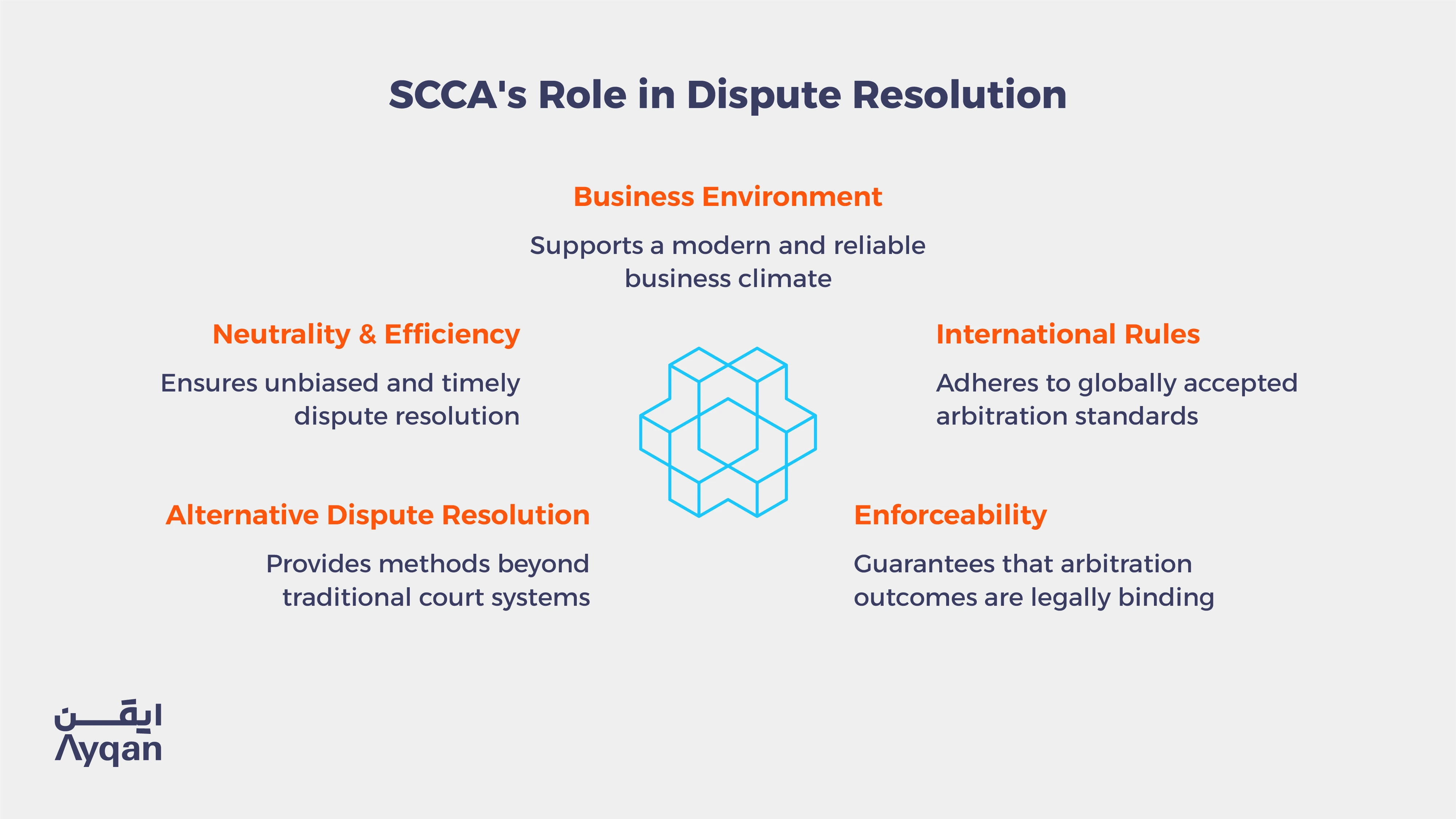
The Saudi Center for Commercial Arbitration (SCCA) serves as Saudi Arabia's leading institution for alternative dispute resolution. Established to support a modern business environment, the Center administers arbitration and mediation proceedings under internationally recognized rules while ensuring neutrality, efficiency, and enforceability. Its role has become increasingly important as domestic and international businesses seek reliable mechanisms for resolving commercial disputes outside the courts.
Establishment and Council of Ministers Resolution No. 257 (2014)
The Saudi Center for Commercial Arbitration was established by Council of Ministers Resolution No. 257 issued in 2014, as a specialized national institution for resolving commercial disputes outside the ordinary courts. Its creation formed part of broader reforms to the commercial dispute resolution system in the Kingdom, responding to the business community's need for a fast, reliable mechanism that protects the confidentiality of its disputes and produces legally enforceable outcomes.
Institutional Independence
SCCA operates with clear institutional independence; it is neither a government agency in the administrative sense nor a profit-driven private entity. This independence reinforces its neutrality and allows parties from any sector, domestic or foreign, private or public, to trust the integrity of its proceedings. The government does not direct its arbitral decisions, nor does it intervene in the appointment of arbitrators.
SCCA's Role in Saudi Arabia's Investment Climate
The Center contributes to the investment environment from a critical angle: it gives foreign companies entering the Saudi market confidence that their disputes will be resolved to professional international standards rather than unpredictable outcomes. That assurance is a tangible factor in foreign direct investment decisions.
Organizational Structure
The Saudi Center for Commercial Arbitration is supported by a governance framework designed to ensure independence, transparency, and the efficient administration of disputes. Its organizational structure separates strategic oversight from case administration, helping maintain the integrity of arbitration proceedings while ensuring that cases are managed in accordance with the SCCA Rules and international best practices.
SCCA's Leadership
The Center is managed by a Board of Directors chaired by a President appointed under the Center's internal regulations. Leadership changes periodically; for current leadership information, it is recommended to consult the SCCA's official website at scca.org.sa.
Board of Directors: Composition and Role
SCCA's Board consists of specialists in law, commerce, and business management. Members are required to have practical expertise in arbitration, commercial law, and business administration. The Board sets the Center's strategic policies, oversees service quality, approves arbitration rules, and reviews them periodically. It operates under an adopted internal charter that defines its powers and responsibilities.
The SCCA Court and Its Technical Role
The SCCA Court is the Center's technical arm for case management. It is a specialized body responsible for deciding sensitive procedural matters, including appointing arbitrators, determining challenges, and verifying the validity of arbitration agreements before proceedings commence. The SCCA Court does not issue substantive decisions on the merits of disputes; it functions as a quality control mechanism that helps ensure proceedings are conducted fairly, efficiently, and in accordance with the applicable arbitration rules.
SCCA's Legal Framework
The effectiveness of the Saudi Center for Commercial Arbitration is underpinned by a clear legal framework that aligns institutional arbitration with Saudi law and international best practices. This framework defines how arbitration proceedings are conducted, the types of disputes that may be referred to SCCA, and the legal basis for recognizing and enforcing arbitral awards.
The Governing Legislation
SCCA operates within the framework of Saudi Arabia's Arbitration Law, issued by Royal Decree No. M/34 of 1433H, the foundational statute for arbitration proceedings in the Kingdom. Beyond the Law, the Center operates under its own procedural rules, which are regularly updated and set out the procedures for tribunal constitution, case management, hearings, arbitral awards, and administrative fees.
Types of Disputes Covered and Excluded
SCCA has jurisdiction over a wide range of commercial disputes, including those arising from sale and supply contracts, construction agreements, commercial partnerships, commercial real estate transactions, and intellectual property matters in a business context. It does not have jurisdiction over criminal matters, personal status disputes, or disputes that require the exercise of sovereign governmental authority.
Relationship Between SCCA and the 1433H Arbitration Law
SCCA is the institution that administers arbitration proceedings, while the Arbitration Law provides the legal framework governing those proceedings. The two operate together: SCCA applies its procedural rules within the limits of the Law, and arbitral awards administered by the Center derive their legal authority from the Arbitration Law itself. Where any provision of the SCCA Rules conflicts with the mandatory provisions of the Law, the Law prevails.
SCCA Rules and Their Key Features
The SCCA Rules provide a structured framework for administering arbitration proceedings from start to finish. Designed in line with international best practices, they offer flexible procedures that allow parties to resolve disputes efficiently while ensuring fairness, due process, and procedural certainty. Depending on the nature and urgency of the dispute, parties may choose between standard, expedited, or emergency arbitration procedures.
Standard Arbitration Rules and Tribunal Constitution
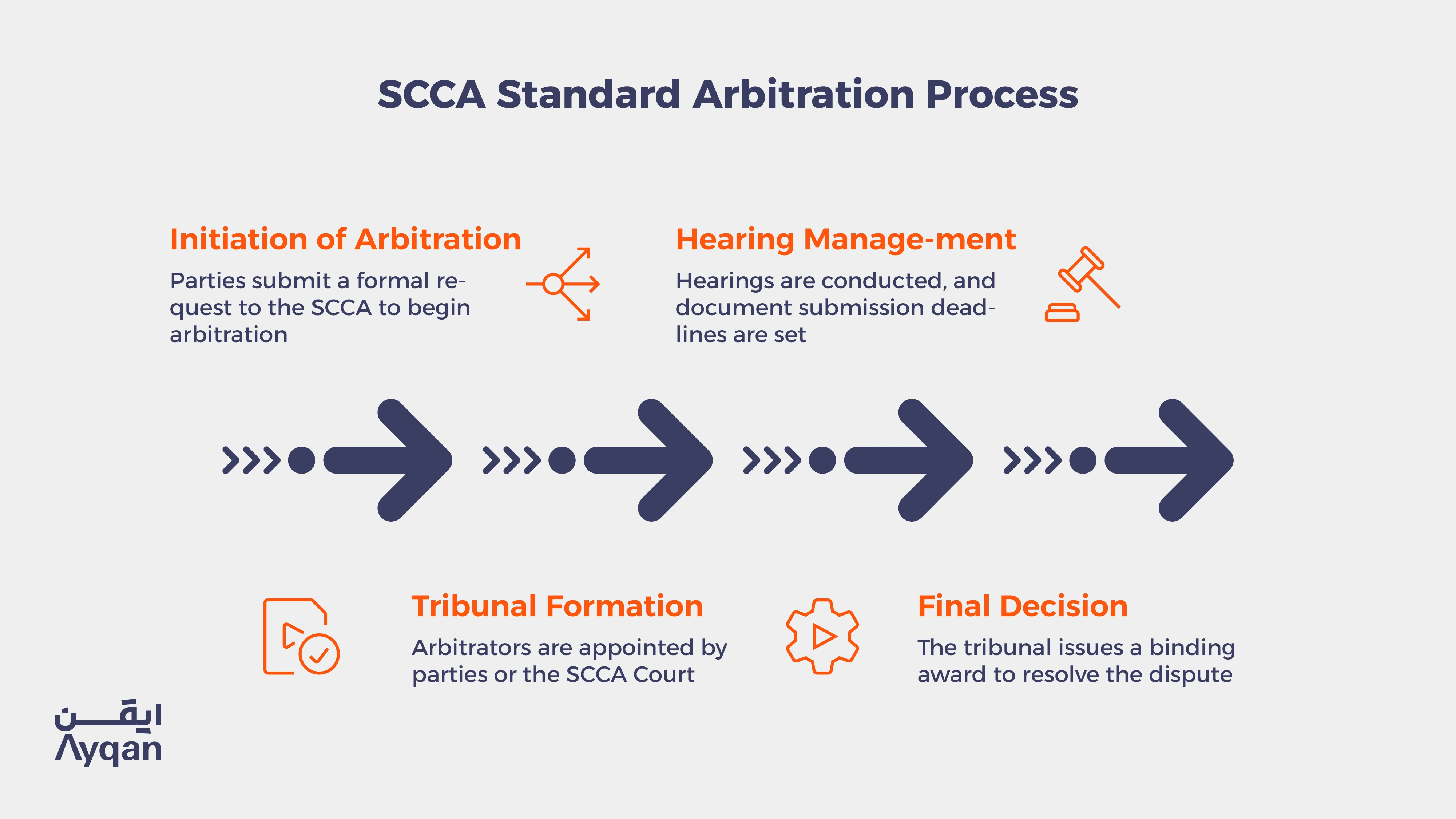
The standard arbitration rules govern the full process from filing a request for arbitration to issuance of the award. They cover how arbitrators are appointed, either directly by the parties or by the SCCA Court where the parties cannot agree, how hearings are managed, document submission deadlines, and the grounds for challenging an arbitrator. The tribunal may consist of a sole arbitrator or three arbitrators, depending on the size of the dispute and the parties' agreement.
Expedited Arbitration: When and Why to Use It
For commercial disputes requiring a swift resolution, SCCA offers an expedited proceedings track designed to produce an award within approximately six months. It is typically used for disputes where the contractual facts are clear and the amounts claimed do not require extensive investigation.
Emergency Arbitration: The 14-Day Award Procedure
SCCA allows the appointment of an emergency arbitrator who can issue interim relief measures and provisional orders within fourteen days of filing. This emergency award does not resolve the underlying dispute on the merits but helps prevent further harm while the full tribunal is constituted. It is particularly useful where delay is costly, such as when assets need to be preserved or contractual obligations must be temporarily suspended.
Electronic Arbitration Protocol and Digital Signatures
SCCA has developed a comprehensive electronic arbitration system that enables fully remote case management, including electronic filing of pleadings, virtual hearings, and the issuance of digitally signed arbitral awards. This digital framework allows domestic and international parties to participate efficiently in SCCA proceedings without the need for a physical presence in Saudi Arabia.
SCCA Services in Detail
The Saudi Center for Commercial Arbitration offers a range of dispute resolution services designed to meet the needs of businesses operating in Saudi Arabia and internationally. In addition to administering arbitration proceedings, SCCA provides mediation, case support services, and other resources that help parties resolve commercial disputes efficiently and in accordance with internationally recognized standards.
Institutional Arbitration and Binding Final Awards
Institutional arbitration is SCCA's core service. Once an arbitral tribunal is constituted, it administers the proceedings under the SCCA Rules and ultimately issues a final and binding arbitral award. These awards are enforceable through the Saudi courts and may also be recognized and enforced internationally in jurisdictions that are party to the New York Convention (1958), to which Saudi Arabia is a signatory.
Institutional Mediation
Alongside arbitration, SCCA administers mediation for parties seeking to resolve disputes through negotiated settlement. SCCA-appointed mediators act as independent and neutral facilitators, helping the parties reach a mutually acceptable resolution. Mediation is often faster and less costly than arbitration and can preserve commercial relationships by encouraging collaborative solutions.
Support Services for Cases Managed Outside SCCA
SCCA also provides administrative support for arbitration proceedings conducted outside its institutional framework. These services include access to accredited arbitrators, hearing facilities, and translation and document management services, making the Center an attractive venue for both domestic and international arbitration seated in Saudi Arabia.
SCCA Fees
Understanding the costs of arbitration is an important part of deciding whether SCCA is the appropriate forum for resolving a dispute. The Center applies a transparent fee structure covering registration, arbitrator compensation, and mediation services, allowing parties to estimate the financial implications of commencing proceedings.
Non-Refundable Registration Fee
Submitting a request for arbitration requires payment of a non-refundable registration fee, regardless of whether the claim is later withdrawn or the dispute is settled. The amount varies according to the value of the claim and covers the administrative costs of opening and processing the case.
How Arbitrator Fees Are Calculated
Arbitrator fees are determined in accordance with SCCA's approved fee schedule, which generally links compensation to the value of the dispute. Although higher-value claims attract higher fees, the scale decreases proportionately as claim values increase. The parties typically share these costs at the outset, while the arbitral tribunal decides in its final award how the costs should ultimately be allocated.
Mediation Fees
Mediation fees are generally lower than arbitration costs because mediation is typically less formal and concluded within a shorter timeframe. These fees cover the Center's administrative expenses and the mediator's remuneration. The latest fee schedule is published on the SCCA's official website.
SCCA's Fee Calculator
SCCA provides an online fee calculator that allows parties to estimate the costs of arbitration by entering the value of the dispute and the number of arbitrators. This tool helps businesses assess the likely cost of proceedings before deciding whether to commence arbitration.
How to File a Case With SCCA
Commencing arbitration before the Saudi Center for Commercial Arbitration (SCCA) requires more than simply filing a claim. Parties must have a valid arbitration agreement, comply with the SCCA Rules, and submit the required documentation to ensure the proceedings can begin without unnecessary procedural delays.
The Arbitration Clause Requirement
To refer a dispute to SCCA, the parties must have agreed to arbitration either through a clause in their commercial contract or by entering into a separate arbitration agreement after the dispute has arisen. Careful drafting of the arbitration clause is essential, as unclear or inconsistent wording can lead to jurisdictional disputes before the substantive issues are considered.
SCCA's Model Arbitration Clauses for Commercial Contracts
SCCA publishes model arbitration clauses that businesses can incorporate directly into their commercial contracts. These clauses typically specify the seat of arbitration, the language of the proceedings, the number of arbitrators, and the governing law, reducing the risk of procedural uncertainty if a dispute arises.
Filing a Request for Arbitration: Steps and Required Documents
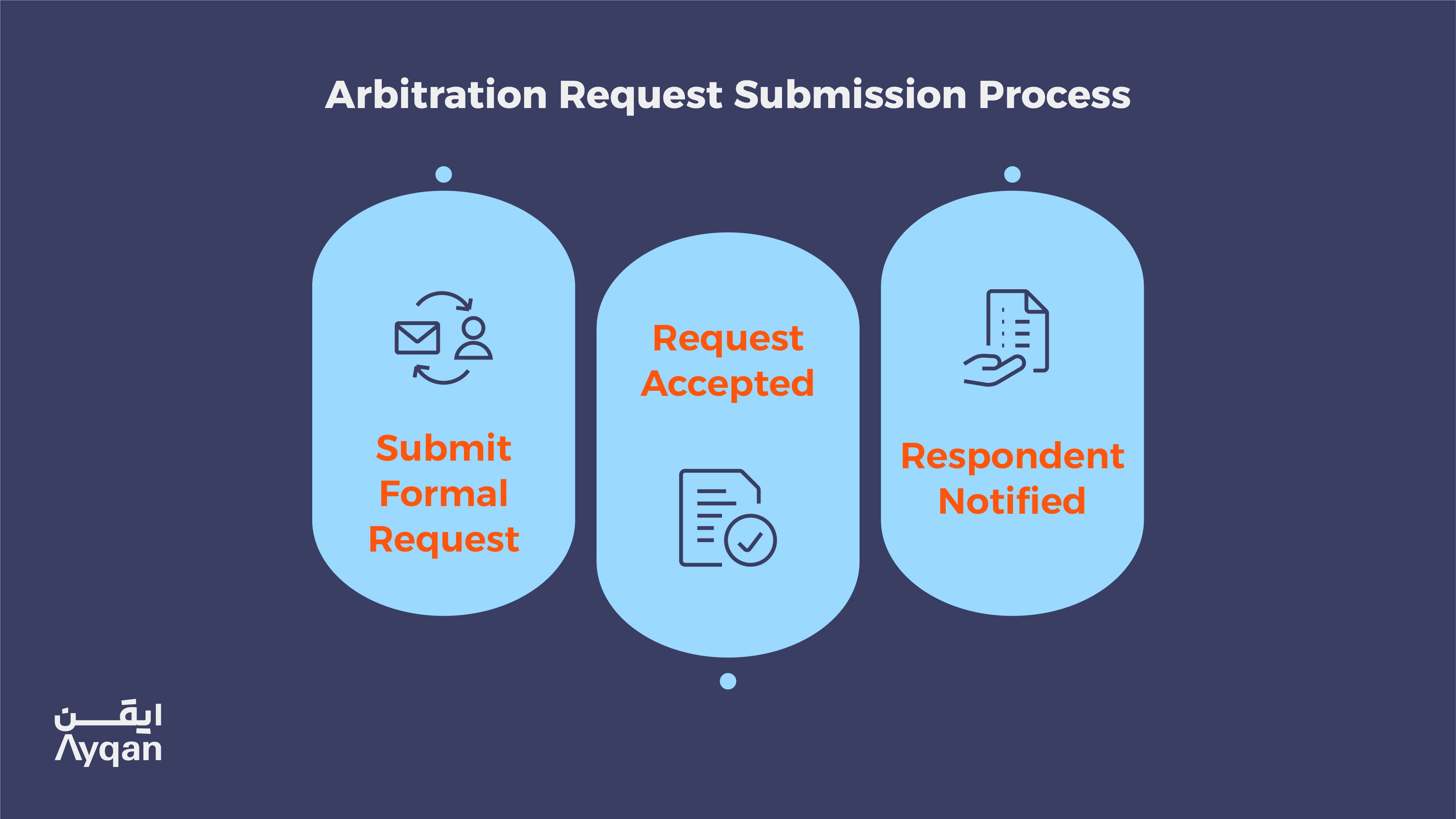
Arbitration proceedings begin by submitting a formal request to SCCA. The request should include the parties' details, a summary of the dispute and the relief sought, a copy of the arbitration agreement or the contract containing the arbitration clause, and payment of the applicable registration fee. Once the request has been accepted, SCCA notifies the respondent and begins the process of constituting the arbitral tribunal.
How Can Legal Counsel Help You Before SCCA?
Arbitration before SCCA, while less procedurally complex than traditional litigation, still demands careful legal preparation: drafting the statement of claim, organizing evidence, defining the relief sought, and representing the client at hearings. Choosing a legal representative with real experience in commercial arbitration makes a meaningful difference to the outcome.
Ayqan has experience representing clients before arbitral tribunals, including SCCA. Contact us or book a consultation to begin assessing your case.
This article is provided for general information only and does not constitute legal advice. For advice on a specific matter, contact Ayqan Law Firm.
Official source: Ministry of Commerce